
The Power of Thought-Provoking Conversations in Shaping Young Minds
Education goes beyond the pages of textbooks, classes and tests. Genuine education takes place only when students are encouraged to question, introspect and even voice out their opinions. Thought-provoking conversations encourage youths to think critically rather than memorise information.
University systems comprising colleges located in different locations offer learners opportunities to encounter new ideas, cultures, and experiences.
Such conversations stimulate the desire to learn more and enhance educational empowerment through communication. They also increase confidence in expressing oneself while encouraging learners to listen to other people’s views.
The Science of How Deep Talks Change the Brain
Meaningful conversations do more than improve communication skills. The influence they exert on students’ thinking is massive.
Discussion in educational settings helps students combine language skills, emotional understanding, and logical thinking creating a more engaging and meaningful learning experience. They get fantastic opportunities to organise their thoughts and present their opinions.
Key outcomes include:
- Enhanced reasoning skills through analysis and discussion.
- Development of self-awareness through the reflection of one’s own values.
- Improvement of communication skills through the correct expression of ideas.
- Improvement of problem-solving skills by thinking from different angles.
A university with multiple institutions can offer students a wider range of academic programs, specialised facilities, and collaborative opportunities across its educational network. It enables them to be exposed to new perspectives and consequently improve their knowledge base. They also encourage leadership education through broader cultural and academic interactions.
Four Major Benefits for Growing Minds
Inspirational discussions play a crucial role in the development of knowledge and personal growth in many ways.
Critical Thinking Skills
The skill of challenging ideas and assumptions is essential for any student.
- Analysis is conducted from multiple angles.
- Opinions are developed based on facts.
- Decision-making abilities develop.
Emotional Intelligence Improved
- Discussion enables students to understand the issues beyond their surroundings.
- Listening skills get developed.
- Perspectives are valued.
Better Relations are Built
- Students gain confidence because perspectives are valued.
- Students feel comfortable engaging in discussion.
- Communication skills get developed.
- The students learn to trust themselves.
Resilience and Adaptability
Real-life discussions equip students to face future problems.
- They become skilled at dealing with conflicts constructively.
- They learn to accept criticism.
- They adapt better to changes.
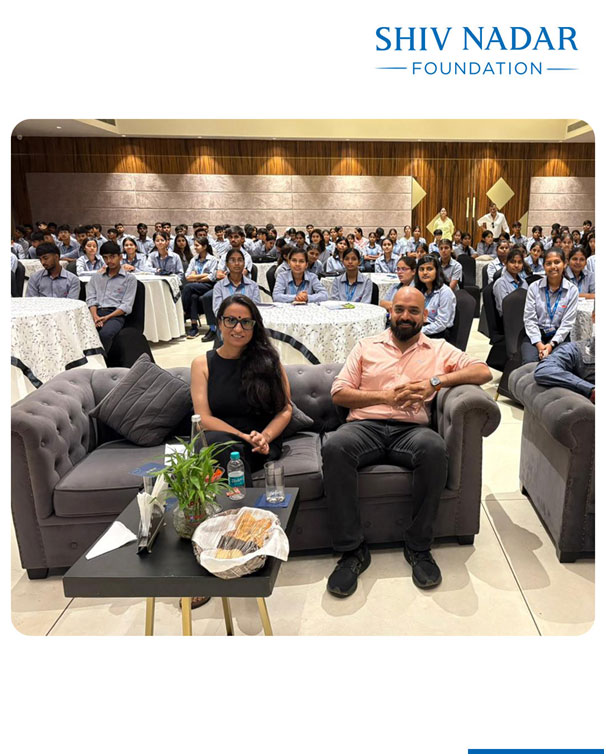
The impact of one such learning experience was seen recently when Mr Rahat Kulshreshtha, co-founder of Quidich Innovation Labs, motivated VidyaGyan students through stimulating discussions and inquiry-based learning.
This experience helped students develop ideas that went beyond conventional classroom-based learning and think creatively, thereby realising the concept of education for all by making learning exciting.
Simple Ways to Encourage Productive Discussion
Learning centers may help promote discussion using simple methods that will involve the learner in the entire learning process.
Open-Ended Questioning
Open-ended questions require some form of explanation.
Some examples include:
- What led you to hold such an opinion?
- How would you tackle this problem?
- What could be a different approach?
Create Discussion-Based Learning
Students engage more actively when conversations become part of the learning experience.
Useful methods include:
- Group discussions
- Debates
- Collaborative Projects
- Interdisciplinary studies on campus
- Active Listening
It is equally important to listen than to talk.
This will ensure:
- A better understanding of other people’s perspectives.
- Effective discussions.
- Good communication skills.
Linking Lessons to Relevant Issues
The level of interest among students rises when the topic under discussion concerns one of their practical problems. This makes learning more relatable, engaging, meaningful and easier to apply.
Some areas of discussion could be:
- Technology and Innovation
- Sustainability
- Leadership
- Impact on Society
These kinds of discussions will help students relate their classroom lessons to practical situations, assisting them in developing relevant skills and decision-making capabilities.
Turn Small Talk into Big Ideas
Learning moments occur even in the conversations we have in our daily lives. There is no doubt that one can motivate the students to learn more and think more through conversations.
Conversations about a project undertaken in schools can be used to discuss teamwork and leadership. Conversations about technology can address ethical questions and moral responsibilities. Career-related conversations can motivate students to contemplate their future and life goals. Such conversations play an important role in the modern education system in India.
A university comprising several colleges across various locations tends to bring together students with distinctive experiences and points of view. Discussion can help build stronger relationships among students and encourage collaboration.
Students who participate in communication regularly become curious, flexible, and confident. The ability to effectively communicate and understand other views is a critical skill they should have.
Shiv Nadar Foundation: Empowering Young Minds Through Transformational Education
Thought-provoking conversations play an important role in building confidence, curiosity, and critical thinking among students which are useful in life as well. For over two decades now, the Shiv Nadar Foundation has been advocating for this idea by focusing on transformative educationand societal transformation.
The institutions set up by the Foundation have played a key role in helping countless learners gain access to quality education and in promoting innovation, leadership, and personal development, among other areas.
The philosophy of the Shiv Nadar Foundation Noida, is termed Creative Philanthropy and entails setting up institutions that will make a difference for many generations to come. Students and graduates of the Foundation’s educational establishments have distinguished themselves at reputable universities worldwide.
FAQs
Q1. What does thought-provoking conversation mean?
Thought-provoking discussions stimulate deep thinking and idea sharing.
Q2. What is the meaning of the 3-2-1 rule of conversations?
It involves the use of three main points, two examples and one lesson learned from the discussion.
Q3. How to have thought-provoking discussions?
It all comes down to asking open questions, active listening and varied perspectives.
Q4. Why are thought-provoking conversations necessary for students?
Such conversations can enhance critical thinking, boost confidence, develop communication skills and improve emotional intelligence.
Q5. How can educators promote meaningful conversations among students?
Educators can adopt methods such as open-ended questions, discussions and relevant topics.
Q6. How do thought-provoking conversations support student leadership development?
Thought-provoking conversations will make students develop their leadership qualities through confidence, decision-making, teamwork, and communication.