
How Open Conversations Can Drive Meaningful Social Change
Social change usually does not occur due to policies or movements alone, but it is initiated through much more basic and powerful elements, like honest conversations. All social change is a result of people who have listened, questioned, and engaged in discussions on important topics.
Open discussions provide room for understanding, dispel any misconceptions that may exist, and make people feel responsible as a community. With the modern education system in India, having these kinds of conversations helps people come together using their common interests. This helps simplify social problems and makes them more approachable.
Even in a society that is divided because of different perspectives, cultures, and experiences, conversation still stands out as one of the best ways to create social change.
Shifting Perspectives and Challenging Biases
Open conversations allow people to examine thoughts they may have held without fully questioning them. Many times, bias occurs due to restricted exposure, preconceived ideas, and social influences. Honest discussion helps one challenge and overcome such biases by presenting facts that people might not be aware of.
An open discussion based on respect can bring forward aspects that statistics alone cannot show. In many cases, the human aspect of social problems comes across through personal accounts.
- Challenging Stereotypes: Open discussions help dispel stereotypes which often influence our views of people and societies.
- Gaining Perspective: Listening directly helps one gain perspectives not obtainable through other means of communication.
- Encouraging Self-Reflection: Hearing diverse perspectives naturally prompts individuals to reflect on their own beliefs.
Meaningful perspective changes are rarely achieved through debates. They come through discussions where curiosity is the starting point.
Building Trust and Community
Social transformation needs cooperation, which is possible only through trust. Open conversation builds trust since it helps to establish connections beyond the mere surface level.
Communities are built from the bottom up, but they cannot grow strong if members do not feel heard and valued. Leadership education plays an important role in cultivating this kind of culture by facilitating environments where everyone feels free to express their thoughts, opinions, and ideas in a secure setting.
People are more willing to work together when they understand one another’s intentions and values. The feeling of connection turns solitary persons into participants in a greater group.
- Creating Belonging: Conversation enables one to feel valued and included.
- Improving Relationships: Open discussion establishes effective relationships through bringing different people into a conversation based on trust and understanding
- Facilitating Cooperation: Trust promotes cooperation within a group.
Social unity does not happen automatically. Meaningful change is built using one conversation at a time.
Encouraging Action and Advocacy
Conversations become extremely effective when they inspire action. Simply having an awareness of something does not bring about any change unless it leads to action.
An open conversation enables individuals to relate social problems to real-life situations. In such cases, awareness is easily converted into participation. Individuals who feel informed and heard are more likely to advocate for their rights and support meaningful causes.
As Ms Manjima Chatterjee stated during a recent event, real progress starts with open conversations, curious minds, and leading by example. The message highlights how educational leadership programs help shape this perspective, proving that meaningful conversation can spark action and create lasting social change.
Such reflection reminds us that meaningful advocacy often brings about a single exchange of ideas.
Reducing Polarisation
Modern society often struggles with division. Disagreements between parties can soon create an obstacle that impedes understanding. Through open conversation, there is hope to minimise the distance through constructive discussion.
Conversation does not call for agreement among all participants. Progress can be achieved through constructive discussion, even without full agreement. Conversation humanises the other side and avoids the risk of ignoring them.
Polarisation thrives when communication stops. Honest dialogue is what makes reconnection possible.
- Promotion of a Respectful Debate: Dissenting opinions can be shared without any malice.
- Humanising the Opinions: The individual transcends from being just an image of a stereotype.
- Promoting Understanding: Conversations help promote tolerance.
Often, change occurs by turning conflict into understanding.
Discovering Common Grounds
Beyond the social and ideological divides, people hold similar visions: equality, respect, opportunity, safety, and education for all. Through conversations, these common grounds can be revealed.
When there are shared values, people gain strength in working together since there is something that binds them all into one cohesive effort.
Finding common ground does not erase differences. It creates enough understanding to move forward together.
Key Principles for Impactful Conversations
A conversation must have an intentional purpose. Effective conversation operates under a set of principles that enable comprehension, not disunity.
- Curiosity and Humility: One learns and grows through engagement in conversation characterised by curiosity and humility.
- Listen to Understand: Listening in order to understand proves to be much more efficient than listening just to respond.
- Respect: People can speak freely without fear of judgment.
- Collective Accountability: A conversation will have meaning when it prompts responsible actions. These principles transform communication into a catalyst for meaningful social progress.
Shiv Nadar Foundation: Empowering Change Through Conversation and Action
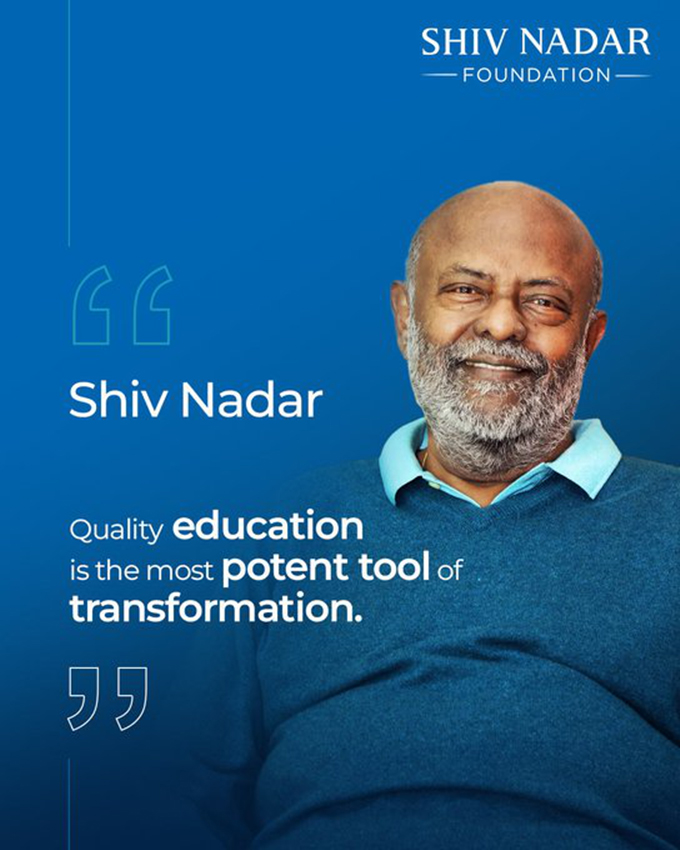
Open conversation can only be made possible with a commitment on behalf of organisations that seek to bring about change. One such organisation is the Shiv Nadar Foundation. Founded in 1994, the Shiv Nadar Foundation has been committed to transformational education for three decades. It operates under the principle that change is only possible through discussion and deliberate action.
Institutions have been key to overcoming socio-economic boundaries and nurturing future leaders through the Foundation’s initiatives. Over the years, the Foundation has enabled thousands of students to attain global success while contributing positively to society. Connect with the Shiv Nadar Foundation to join meaningful conversations and initiatives that help shape a better, more inclusive world.
FAQs
Q1. Why is open conversation essential?
Open conversation creates trust, facilitates better decision-making, helps in resolving conflicts efficiently and creates an atmosphere in which individuals feel comfortable voicing their opinions.
Q2. Which are the communication approaches towards social change?
The communication approaches towards social change are participatory communication, behaviour change communication, mass communication, and advocacy-based communication.
Q3. How to encourage open conversation?
Open conversation develops through genuine listening, building spaces where people feel comfortable sharing, and welcoming honest opinions with respect and openness.
Q4. How does open communication build stronger communities?
Open communication builds stronger communities by encouraging understanding, teamwork, and mutual respect among people with different viewpoints.
Q5. What are the benefits of meaningful conversations in society?
Meaningful conversation reduces polarisation, uncovers shared values, and inspires collective action toward lasting social progress.